


Pain Management
When should tooth pain not be postponed?
Explains when night pain, lingering sensitivity, or chewing pain deserve earlier clinical attention.

At Ozel Secil Sonmez Oral and Dental Health Polyclinic, we welcome you with a friendly approach, clear planning, and comfortable treatment steps.
We offer a brief preview of core treatment areas including surgery, aesthetics, pediatric dentistry, and orthodontics.
Clinical findings, imaging, and the recovery route are reviewed t...
Implant planning considers bone support, soft-tissue harmony, and...
Pressure, swelling, and neighboring-tooth effects are assessed to...
Staining, shade, and sensitivity are reviewed together to shape t...
Preventive care, age-appropriate communication, and follow-up rhy...
Shade, form, and bite balance are aligned for a more natural rest...
Medical aesthetic planning focuses on lower-face balance and pres...
Restorative and endodontic decisions are shaped around preserving...
Braces and aligner planning weighs bite, cleanability, and follow...
We gather the topics patients ask about most before an appointment in a short, calm, decision-friendly way.

Pain Management
Explains when night pain, lingering sensitivity, or chewing pain deserve earlier clinical attention.

Orthodontics
Summarizes how appearance, case type, and treatment discipline change which option makes more sense.

Cosmetic
Covers expectations, sensitivity, and care steps around in-clinic whitening.

Gum Health
Helps distinguish temporary irritation from gum findings that may need closer periodontal attention.

Pediatric Dentistry
Explains why the first pediatric dental check does not need to wait for pain.

Planning
Summarizes how complaint history, previous treatment, and expectations make the first plan clearer.
In our clinic in Ankara, we carry out examination, planning, and follow-up steps with the same simple communication style.

Address
Address
Mehmet Ali Alt Cad. No:85 Akdere - Mamak / ANKARA
Loading this map area connects to a third-party map provider. We do not load the map until you allow it.
We gathered the topics visitors most often ask about before a consultation in Ankara and Mamak, using calm notes that make the first evaluation easier to understand.
Tooth pain does not always come from the same source. It can be linked to surface sensitivity, a deeper cavity, nerve involvement, a cracked structure, an older filling, or gum-related irritation. For that reason, the pattern of pain matters as much as the location itself.
Night pain, long-lasting hot or cold sensitivity, pain while chewing, swelling, or a throbbing sensation can justify an earlier evaluation. Some problems may look temporary at first, yet become more demanding if the underlying cause continues to progress.
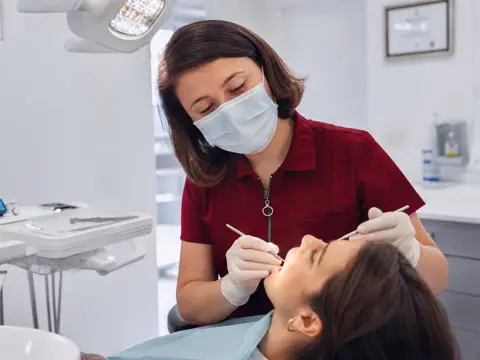
During the first examination, the history of the complaint, previous dental work, and imaging when needed are reviewed together. The aim is not to rush into treatment, but to understand the likely reason for the pain and choose the most proportionate next step.
Gum bleeding can sometimes follow temporary irritation or overly forceful brushing, but repeated bleeding often means the gum tissue deserves closer attention. Swelling, tenderness, odor, or discomfort during brushing can make the picture more meaningful.
When gum-related problems are not noticed early, they may affect more than daily comfort. The goal is not to alarm the visitor, but to clarify whether the issue looks temporary or whether it points to a condition that should be evaluated more carefully.
The examination usually looks at plaque and tartar levels, the extent of bleeding, the condition of the supporting tissues, and home care habits. Preventive advice and clinical care are then considered according to the findings.
Even a single missing tooth can influence chewing habits, the way forces are distributed in the mouth, and sometimes the position of neighboring or opposing teeth. These changes do not affect everyone at the same speed, but they are relevant in planning.
Implants are one possible solution, but they are not the only planning route for every patient. Bone support, gum condition, overall oral hygiene, previous restorations, and expectations all shape the treatment discussion.
The main purpose of evaluation is not to push one method over another. It is to understand how the missing tooth affects function today and what kind of balanced long-term solution fits the individual situation.
An impacted wisdom tooth does not always cause a problem. In some people, regular follow-up is enough, while in others there may be repeated pain, trapped food, gum swelling, limited opening, or pressure toward the back of the jaw.
Pain alone does not decide the plan. The position of the tooth, its effect on the neighboring tooth, whether it has partially erupted, and whether symptoms repeat over time all matter.
Clinical findings and imaging are usually reviewed together before deciding whether simple follow-up or a surgical approach makes more sense.
The difference between a tooth that can be restored with a filling and one that may need root canal treatment is not always visible from the outside. Depth of decay, nerve involvement, pain history, chewing sensitivity, and imaging all play a role.
In some teeth, preserving the tooth with a filling remains realistic. In others, the pulp has been affected enough that root canal treatment becomes the more protective route.
The decision is usually based on how much healthy structure can still be preserved and how predictable the long-term result is likely to be.
Appearance matters in orthodontic planning, but it is only one part of the decision. The type of crowding, bite relationship, tooth rotations, oral hygiene habits, and treatment compliance can all influence the better choice.
Clear aligners may feel more discreet for some patients. Braces may offer advantages in situations that require more controlled movements. The point is not to present one option as universally better, but to match the method to the case.
Photographs, measurements, bite analysis, and expectations are typically reviewed together to create a treatment plan that supports both esthetics and function.
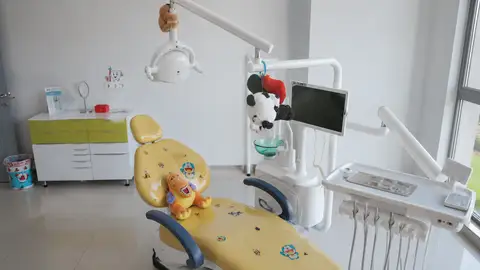
A pediatric dental visit does not need to wait for pain. Early visits can help monitor eruption patterns, discuss hygiene habits, and allow the child to become familiar with the setting in a calmer way.
Baby teeth still matter for chewing, speech development, and space guidance for permanent teeth. That is why early findings can sometimes help prevent larger needs later on.
The purpose of the first visit is not to frighten the child. It is to create an age-appropriate plan, review symptoms if any exist, and explain the next steps clearly to the family.
The first examination is more than a quick look inside the mouth. The timing of the complaint, previous procedures, medications, grinding habits, esthetic expectations, and chewing difficulties can all influence planning.
Instead of focusing only on one visible area, the visit often reviews the bite, gum condition, existing restorations, oral hygiene, and imaging when needed. Sometimes a small detail from the patient history helps clarify the plan significantly.
Bringing a clear timeline of symptoms and past treatment can make the conversation easier. The goal is not to turn the visit into a sales process, but to make the logic behind each step more understandable.
The information in this section is for general guidance only. It does not replace a clinical examination, diagnosis, or a treatment plan prepared for the individual patient.