Service Guide
How Is Implant Surgery Planned?
Summarizes how bone support, gum condition, bite, oral hygiene, and healing are reviewed together in implant planning.
Prepared by
Dt. Seçil Sönmez
Clinical review
Dt. Seçil Sönmez, Dentist
Updated
May 13, 2026
Read time
6 min
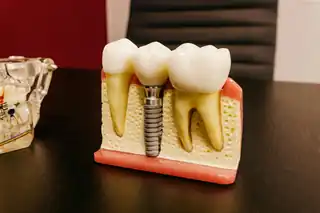
Implant surgery involves more than placing a new structure where a tooth is missing. Bone volume, gum support, opposing contacts, and overall oral hygiene are all reviewed during planning. The focus is not only on filling the gap, but on building a restoration that can function in balance over time.
Some patients are ready for a direct implant plan, while others need healing time after extraction, tissue preparation, or a staged approach. That difference is not about speed alone, but about how well the surrounding tissues can support the result. For that reason, implant surgery is often part of a broader treatment sequence rather than a single isolated visit.
Early consultations also review habits such as smoking, grinding, previous restorations, and expectations. The goal is not to push one option, but to clarify whether an implant is appropriate and, if so, what timing and follow-up structure will support it best.
For some patients, the first step is not the implant itself but control of infection, healing after extraction, or improvement in hygiene. A good implant plan therefore takes into account not only the component being placed, but also whether the surrounding tissues can stay healthy over time.
General information
This article is for general information and does not replace a personal diagnosis or treatment plan. Dental concerns should be evaluated by a dentist.