Surgery
Which Signs Lead to Evaluation of an Impacted Wisdom Tooth?
Explains when pressure, repeated swelling, limited opening, or neighboring-tooth sensitivity can justify a closer wisdom tooth evaluation.
Prepared by
Dt. Seçil Sönmez
Clinical review
Dt. Seçil Sönmez, Dentist
Updated
May 13, 2026
Read time
5 min
An impacted wisdom tooth does not always need intervention. In some patients simple monitoring is enough, while in others there may be pressure in the back of the jaw, repeated gum swelling, trapped food, limited opening, or sensitivity around the neighboring tooth.
In those situations, pain intensity alone is not the whole story. The position of the tooth, whether it is partially erupted, its effect on the adjacent tooth, and how often symptoms return all affect the decision.
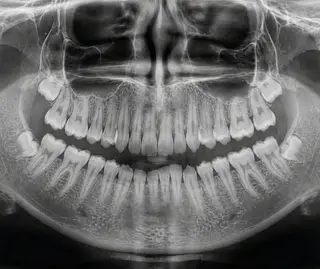
When clinical findings are reviewed together with imaging, both the current discomfort and the longer-term risk become easier to understand. That makes it easier to decide calmly between continued observation and a surgical plan.
Cleanability can also become an important part of the decision. If food keeps collecting in the area, the gum repeatedly flares, or the neighboring tooth begins to carry more risk, the evaluation may change even when the pain is not constant. If surgery is considered, recovery and follow-up should be discussed from the same starting point.
General information
This article is for general information and does not replace a personal diagnosis or treatment plan. Dental concerns should be evaluated by a dentist.