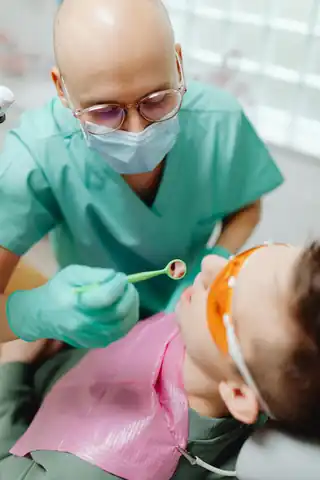
Child Dental Trauma
Why Is the First Check After Child Dental Trauma Important?
Explains what the first evaluation clarifies after falls, hits, fractures, mobility, or color changes in children's teeth.
Erstellt von
Dt. Seçil Sönmez
Klinische Prüfung
Dt. Seçil Sönmez, Zahnarzt
Aktualisiert
13. Mai 2026
Lesezeit
5 min
After a fall or hit, a child may have a chipped tooth, mobility, displacement, lip or gum injury, or color change. Even without pain, the first check helps clarify the condition of the tooth and surrounding tissues.
The examination reviews when the trauma happened, whether a baby tooth or permanent tooth is involved, whether the tooth moved, whether bleeding or swelling is present, and whether the child feels discomfort when biting. Imaging may be used when root or bone information is needed.
Some injuries need only monitoring, while others require closer follow-up or treatment. Color change may not appear immediately, so families should know which signs to watch.
The purpose is not to make the family panic. It is to reduce uncertainty after trauma. The first control makes both the current situation and follow-up signs clearer.
Allgemeine Information
Dieser Artikel dient der allgemeinen Information und ersetzt keine persönliche Diagnose oder Behandlungsplanung. Zahnmedizinische Beschwerden sollten zahnärztlich beurteilt werden.